Commercial Contracts Guidance
Understanding Breach of Contract in Commercial Law

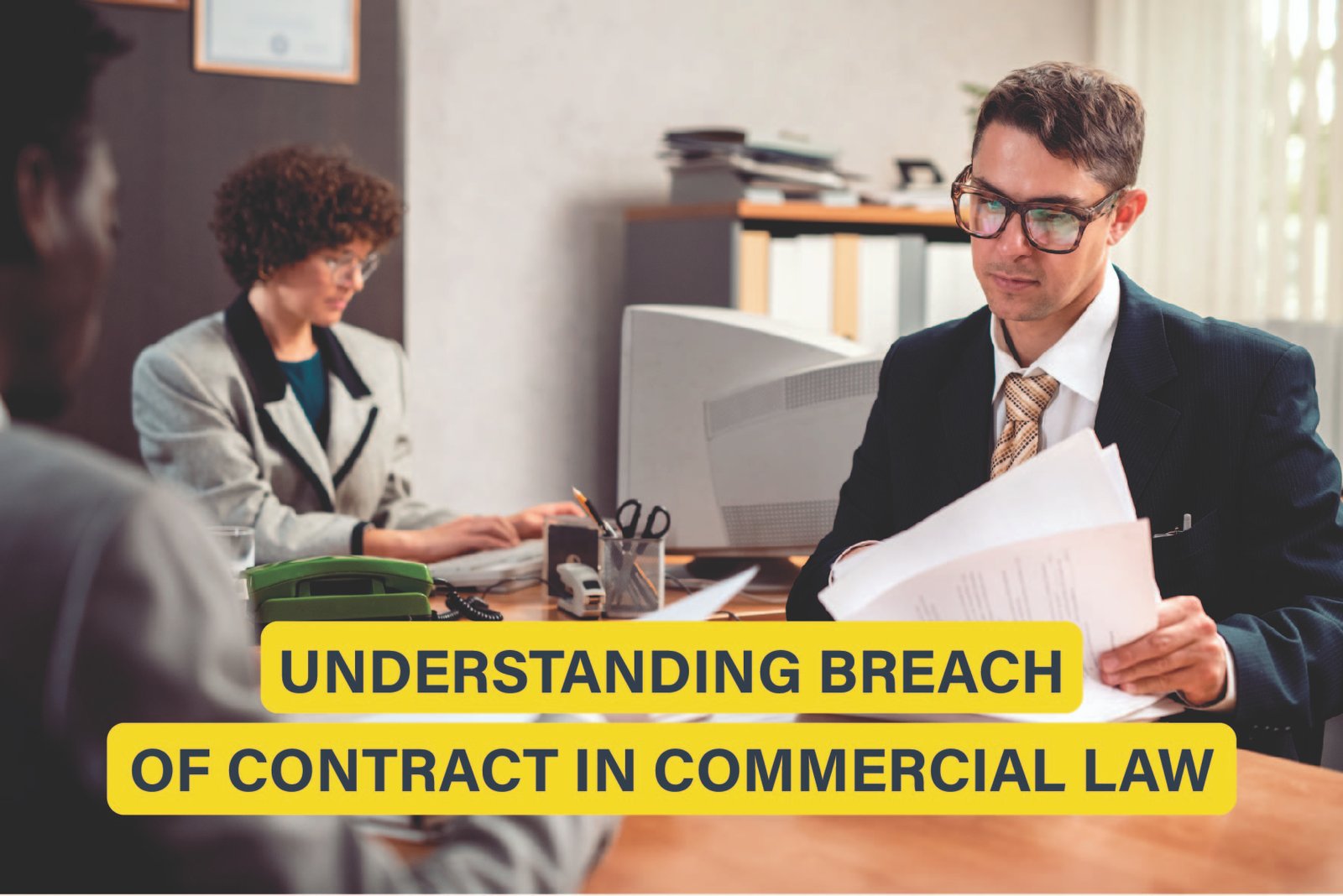
A breach of contract is a violation of a legally binding agreement between two or more parties and is a violation of a commercial law. Such miscarriage, be it minimal or extensive, may cause a loss of revenue, broken relations and lawsuits. In business, contracts play a crucial role in describing responsibilities, demands and requirements among parties. The repercussions when those terms are breached may have serious implications on operations and credibility. Breach of contract is an important concept to understand in safeguarding business interests and also provide accountability. Breaches can take the form of late delivery to the non-performance altogether, and each type of breach has its legal resources and implications. This article highlights the most important points of breach of contract as a commercial law aspect, which assists professionals to define potential risks, exercise functions, and protect against further breaches by managing contracts more wisely.
What Is a Breach of Contract?
A breach of contract can be said to happen when an agreement outright or partially fails one of the parties to meet his side of the agreement. This may vary as failure to deliver goods, delivery of goods at the wrong time or services and or making payments as per the agenda in commercial law. These violations interfere with business operations and may result in the loss of money, broken down relationships, and legal-related issues. It is always necessary to realize the nature and consequences of the breach whether it is partial, complete, purposeful or unavoidable and rectify the problem on time to get adequate solutions to the problem involving proper remedies.
Definition and Legal Framework
A breach of contract can be legally defined as a breach or more of the terms of a binding contract. Breach of contract according to commercial law may be either actual where a party refuses to, or is unable to fulfill his part, or anticipatory where a party gives prior notice that he or she will not be able to honor his part. The hierarchy of applicable law followed by the courts in case of a breach identifies the relevant statutes, case law, and even the language literally in the contract itself to conclude whether there has been a breach and which available remedants may be pursued.
Valid Contract Requirements
In commercial law there are several critical requirements a contract must fulfil to be considered legally binding. These are offer and acceptance, mutual assent, consideration (something of value going across), that it has to be legally valid, and that the parties have to be able to enter into the agreement. In the absence of such factors, a contract can be considered void or unenforceable. Getting everything that should be there at the beginning is a safeguard to both parties and reinforces the chances of enforcement of the agreement in the event that one of the parties breaches the agreement later.
Types of Commercial Contracts
There are many types of commercial contracts, and all of them are dependent on the requirements of particular businesses. Typical examples of this category are the sales contracts, service agreements, partnership agreements, non-disclosure agreements (NDAs), and employment contracts. Both the types define expectations and legal responsibilities peculiar to the business environment. The knowledge of the various types allows companies to be in a position to select appropriate structure of their transactions and there is clarity of responsibilities hence the trend of misunderstandings and possible breaches is minimised.
Common Contractual Obligations
These common contractual obligations in commercial contracts are payment terms, terms of delivery, the performance provision, confidentiality provision, and dispute resolution provisions. These duties are clearly defined so that the two parties can understand their duties and the resultant expectations. A breach may be as a result of not fulfilling any of these obligations, which is intentional or accidental. Having these roles clearly outlined and, sometimes, written down will aid in avoiding conflicts and serve as a solid foundation in case legal action has to be resolved.
Minor vs. Material Breach
Minor breach is a type or form of breach where one of the parties does not perform a small part of the contract but one whose performance has little or no effect on the entire outcome. Conversely, material breach is a severe offense which goes against the fundamental requirement of the contract, usually permitting the offended party to forfeit the contract and demand a recompense. It is crucial to differentiate between these two types of breaches, because based on them legal implications and possible remedies of the affected party are created.
Causes of Breach in Commercial Contracts
A breach of contract in commercial law can occur due to various reasons including internal problems like mismanagement, bad planning or problems with the workers to external factors such as the economic recession, inability to supply or changes in regulations. The breach can be sometimes caused by the lack of clarity in the terms of contract, unrealistic expectations, or other unforeseeable events such as the global crisis or natural disaster. Knowing these causes enables the businesses to be on the lookout and take precautionary steps, build stronger contracts and prompt action when their obligations become endangered.
Miscommunication or Ambiguity
Due to improper communication or ambiguity of expression in contracts, there is a tendency of misunderstanding between parties over their responsibilities. In the event that the terms of the contract are not well outlined both parties can end up having different interpretations of duties and responsibilities causing a breach of contract without prior intention. Such ambiguity may cause conflicts or project deadline delays or poor deliverables. To ensure that it is non-confusing, expectations are aligned, the probability of non-compliance based on mere misinterpretation or oversight is minimal, it is critical to keep things specific, without ambiguous language, and properly documented.
Non-performance Due to Financial Issues
One of the normal reasons that underlie breach of commercial contracts is financial instability i.e. cash flow issue or non-solvency. A company that is experiencing financial problems can fail to pay the suppliers or deliver service contracts or deliver goods promptly. It is possible to default even in the case of well-intending parties, who may experience financial difficulties and face legal and image classifications. They could also conduct financial due diligence and insert protective clauses such as payment schedules and penalties by doing so they could mildly manage their risk as part of their partnering with potentially risky partners.
Delays in Deliverables
Delivery at the right time is an important aspect in the majority of contracts in commerce. Any delays in work caused because of lack of labor, supply chain implications, or internal inefficiencies may violate time-based obligations. Although the product or service may be delivered in the end, its delay may harm the finances of the recipient or lead to operational losses. To prevent soured delays and to create effectiveness in their accountability in the eventuality of late delivery, contracts should have detailed schedules, cushion timelines, and late delivery fines.
Poor Drafting or Lack of Detail
Poorly written and over-generic contracts establish grey areas in the law that augment the chances of brevity. The lack of particular wordings of terms may lead parties to fail to comprehend or undertake their duties or obligations, especially when it is difficult to detect them. In many cases this results into conflict, misunderstanding and eventually breach of claims. An effective contract contains a certain degree of details regarding the obligations, schedule, payment clauses, and conflict resolution methods. It is important to ensure that the drafting process incorporates the services of legal experts who can assist in drawing up agreements that can be honored and those that are accurate.
Force Majeure Events
Force majeure clauses are used to address the unforeseeable conditions that prevent a contract performance due to an unexpected event outside the control of any of the sides to a contract. In cases where such events arise, they are matters that can provide or excuse non-performance legally as long as there is proper detail written in the contract. Unfortunately, not every contract will have a force majeure clause, and courts consider these cases on a case to case basis.
Legal Consequences of a Breach
The considerations to be made regarding the legal aftermaths of a contract violation highly rely on the scale of the given breach and the terms that were envisaged in the given contract. The implications of a breach of the agreement, though, whether it is a small breach or a material breach, can lead to remedies including financial remedies or it can justify termination of the contract or civil action against the breacher. Another factor that is weighed by the courts in respect to the breach is whether the harm done, by the breaching party assumption, was a major one and did the other party in the agreement hold up its side of the bargain. The identified contract terms are clear and allow formulating the proper legal reaction, as well as serve as the ground on which the participant might either enforce rights or claim damages.
Lawsuits and Damages
In circumstances where a breach of contract is made, the wronged party can file a lawsuit to get damages. This usually entails suing to claim compensatory damages, whose aim is to restore the non-breaching party to the position he might have been without the breach. Depending on the situation there are also punitive or nominal damages which can be awarded in Courts.
Termination of Contract
The right of the non-breaching party to legally cancel the contract may take place in case of a serious or material breach. Termination usually comes in situations where a performance cannot be continued or that which is no longer useful. Nevertheless, the ruling should be consistent with termination purposes of the contract or under grounds common principles of law. Unlawful dismissal may also have legal repercussions on its own.
Specific Performance Orders
Specific performance refers to a remedy under the law of which the court requires the violator of the agreement to perform his contractual duties as opposed to damages payment. This solution is normally saved until monetary damages are insufficient- i.e. during a real estate, or specialty goods sale. Certain performance can be ordered by a court in the event that the contract is clear, equitable, and enforceable.
Reputational Damage
A violation of a contract may cause more than financial or legal rebuffs, and it may cause severe harm to the reputation of a company. There can be loss of trust among the clients, partners, and stakeholders resulting in lost business and a damaged brand image. Reliability and integrity are two factors which should be emphasized in certain types of industries and even a slight violation can lead to long-term consequences.
Arbitration and Mediation
Mediation and arbitration are the usual substitute to the court approach in the dispute of contract violation. Mediation-Mediation is where a third party, who is impartial, assists both parties in settling amicably, whereas arbitration brings forth a binding decision on the part of an arbitrator. Such affairs are normally quicker, less rigid and cheaper than case studies in court.
Remedies Available for Breach
Depending on the nature and extent of the breach in question, victims of a breach of a contract have a number of legal remedies accredited to them. The purpose of these remedies is to restore the non-breaching party to pre-contract position; enforce the contract or remedy the losses. It can be through monetary damages, specific performance, or terminating the contract or restoration. The proper remedy is usually based on the terms of contract, how much harm has been incurred and whether breach was material. Comprehending these alternatives will enable companies to act accordingly and guard their legal and financial solutions to commercial conflicts.
Compensatory Damages
The most typical remedy in breach of contract is compensatory damages and their goal is to address the direct financial losses incurred by the non contract party. These damages are aimed to put the injured party to the situation he/she would have been in in case the contract was fully executed. In a court case, there is often a need to show clear evidence of the loss, in terms of invoices, contracts or financial statements.
Consequential Damages
Special damages, which are called consequential damages, make up the loss of an indirect nature that resulted due to the breach, but was not caused by it directly. These can be loss of profits, any reputational damage, or any extra costs of running that would have been predictable by that time the contract was agreed upon. In order to assert consequential damages, the damaged party is supposed to demonstrate the fact that the parties involved were capable of such consequences.
Restitution
Restitution is a common law remedy, whose goal is to avoid unjust enlargement of the breaching party. Rather than punishing the person at the receiving end, restitution aims at restoring any reward or value transferred by the party which did not breach the contract. This may involve refunds of money, real or personal estates, or services. The concept of restitution is frequently applied where a contract has been avoided or repudiated, and it operates by seeking to put the parties to the contract back in the same positions they were in prior to executing the contract, as opposed to applying the agreement itself.
Liquidated Damages
Liquidated damages are the fixed figures within the agreement that have been agreed between the two parties at the very beginning to be paid in case of a breach. This clause gives assurance and prevents lengthy litigation procedures due to the ease of assessing a financial penalty in case of non-performance. Nevertheless, the liquidation damages are salvaged in court only when it is reasonable and not a penalty.
Injunctions
Injunction is a court order directed at compelling, or stopping particular actions of the breaching party. Injunctions In contract matters, injunctions are frequently employed to prohibit one party to carry on objectionable behavior or to maintain the status quo pending litigation. These are temporary or permanent depending on the case.
How to Prevent Breaches in Commercial Contracts
Active measures may significantly minimize the possibility of breach of contract and avoid the emergence of expensive lawsuits. Some of the measures businesses can put in place include writing agreements that are clear and elaborate and specify roles and expectations of various parties involved. An active communication process, careful contract evaluation, and consultation of a lawyer in the negotiation process are also effective in pointing out the issues at their initial stage. Also, they should have backup plans in case of unexpected events and parties should also be in a position to fulfill their commitments. By anticipating possible risks at the beginning, businesses can help to protect their operations and decrease the chances of violations.
Regular Contract Audits
With periodic contract audits, partners will be in a better position to ascertain whether other parties adhere to the provisions and the needs of the agreement. To eliminate possible emergencies that may arise due to a failure to meet the deadline of the work or failure to deliver satisfactorily, periodic reviews may reveal any of the mentioned above before they degenerate into serious defaulting cases. Contract auditing can also enable a firm to undertake adjustments due to varying circumstances or needs.
Effective Communication Channels
The key to avoiding certain misunderstandings in the implementation of the contract is to organize the process of communication. Frequent and open communication will make both sides sync with the expectations, timeline, and deliverables. Also, it brings a collaborative atmosphere to the setting creating an ability to solve problems promptly before they become breaches. Through the open lines of communication during the whole life of the contract, businesses can dispel all doubts, modify the terms when necessary, and prevent possible conflict, decreasing the possible likelihood of the offence due to a misinterpretation or unsavoury lack of knowledge.
Legal Review and Consultation
The inclusion of legal specialists in the process of drafting a contract will result in the enforceability, clarity, and conformity of all the terms stated in the legal framework. Legal review assists in determining the existence of potential risks, vagueness, and enforceability of the contract that may become a source of disputes and breaches. Lawyers can also provide information regarding industry regulations and therefore, by having this information, businesses are able to draft contracts which guard their own interest and which cushion them against future dangers.
Contingency and Risk Management Plans
The existence of contingency and risk management plans assists businesses in being ready in case of a surprise occurrence that might cause a breach. These plans provide the measures that should be undertaken in case of any disturbances, whether they are supply chain problems, natural calamity, or financial crisis and which both parties are aware of the courses of action available to limit the damage. Actively planning against possible risks minimizes the number of risks and also makes the remedy clear, effectively limiting the degree of business interference in case of unexpected events.
Clear Contract Drafting and Clarity
In a bid to minimize breaches, it is important to ensure that all the contracts are drafted clearly and comprehensively. The roles of each party should be distinctively mentioned in contracts, what should be delivered, in which time and what will happen when the parties fail to perform. This will prevent any misunderstanding and give a good basis to enforcement in case breached. The use of clear contract terms using unambiguous language makes all parties understand the obligations they have and this lowers the chances of them claiming that they were not obliged to do something, and this prevents wastes of time and money through any unnecessary legal battle to win a contract in business.
Conclusion :
Breaching of contract is vital knowledge when it comes to commercial law and this is very important when it comes to business and the need to have good interpersonal relations with other professionals. This guide provides an overview of everything there is to know about the identification of various types of breaches, legal consequences, and remedies. One way that businesses can greatly avoid legal risks is through the use of clear contracts, keeping good communication as well as seeking legal advice. Being able to be proactive when it comes to managing breaches does not only protect assets but also help to create long-term trust in your partners and clients. With appropriate laws and enforcement strategies companies will be able to provide an assurance of doing the right things and concentrate with their expansion with the legal tussle lingering over their heads.
Have a breach of contract and need some help with it? Book an appointment with our commercial law professionals now to consult on a personalised basis. Use legal strategies that work to protect your business. Take action now to protect your contracts and your company in the future.
FAQs:
1. What constitutes the breach of contract according to commercial law?
It is known as a breach when either of the parties fails but does so without an excuse under law, to fulfill the commitments under contract.
2. Is it possible that a minor violation may also cause a court case?
Yes, even less serious ones may trigger legal solutions in case damages are caused through them.
3. What are the prominent grounds of breach?
Lack of good communication, financial issues, and unclear expression in the contract are common reasons.
4. What is the contrast between material and immaterial breaches?
Material breaches have a tremendous impact on the product of the contract; immaterial ones, nothing.
5. What can be done legally?
Typical remedies are damages, specific performance and injunctions.
6. Is arbitration superior to litigation of breach cases?
Most of the time– arbitral proceedings are less cumbersome, less formal and cheaper.

It is important to review commercial contracts carefully to ensure that your business interest is not jeopardized and limit the legal risks. The contracts usually have complicated legal terms, latent terms, as well as obligations that may affect your operations, financial benefits, and the reputation. Taking time to read through contracts properly would help you cut through possible traps, remove any confusion, and make better bargains. This guide will provide some practical hints on how you can tackle reviewing commercial contracts in a measured way- what to understand about main clauses and areas of compliance as well as risk areas to be alert to, not to mention professional help. As a business owner, manager or other legal professional, perfecting these review techniques will be able to help you create contracts that are both clear, reasonable and legally acceptable.
Understand Key Contract Components
In order to understand the essence of a commercial agreement one should analyze its main aspects. Pay attention to the parties of interest, the scope of work or services, payment terms, and duration of the contract, and its termination spheres. Knowing these aspects would inform you on what to expect and your duties as well as what the other party should do. Make sure you pay more attention to the clauses on confidentiality as well as any warranties and guarantees. These components will go a long way to prevent surprises and build up the basis of a fruitful business relationship.
Parties Involved
It is important to distinguish all the parties in a commercial contract who should be determined clearly to make it valid. Check the legal names, positions, and powers of all involved parties so as to assert if they are entitled to make the agreement. This avoids future wrangles over who between the parties is supposed to meet the terms of the contract. Besides, you should also check the business registration and legal status of individuals and organizations to be sure they exist and have a right to perform.
Scope of Work
The scope of work clearly sets out the services / products to be bound by the contract and describes the deliverables, the schedule and the quality expectations. This reduces chances of misunderstandings and also enables all the parties to understand their responsibilities in the same way by ensuring that it fits well with your business needs. The scope of a project done in a particular manner reduces the risk of delays, overruns and conflicts since everybody understands what is expected. Make sure you have always revised this section to make it refer to your goals and abilities.
Payment Terms
Payment terms: they are a set of guidelines on how and when the payments will be done in terms of payment amount, payment schedule, and accepted means. Determine whether payment is in milestones, lump sums or periodic fee. One should find out about the possibilities of late payment fines or interest to have no surprises. The eligibility of payment terms can assist you in cash flow management and invoicing complaints or arrears of payment among other issues, so that you would be well financially stable through the process of the contract.
Duration and Termination
In this section, the ramifications of the contract, the length of time whilst it is on, options in renewing, and termination conditions have been articulated. Know the duration of the agreement and in what conditions one of the parties can terminate the agreement. Ensure that you focus on notice periods needed and the consequences of termination before its completion. Clarity on the terms of the contract such as duration and termination provides your business with security as well as flexibility in that you will not be forced into a long term contract or race against a termination of a contract disrupting your operations.
Confidentiality Provisions
Confidentiality provisions determine the parties liabilities or responsibilities of maintaining confidentiality of information provided in the course of the contract. They establish what can be considered as confidential data and how it needs to be handled, along with the duration of these responsibilities. These stipulations with non-disclosure agreements, in general, protect business secrets, client data and proprietary knowledge. By having good confidentiality clauses, you would avoid the illegal usage or release of the information and therefore keep a trust and safeguard the competitive advantage of your company.
Evaluate Risks and Liabilities
Going through risks and liabilities in a business contract is one way of ensuring your business is safe against inexplicable losses. Pay attention to indemnity provisions and make sure who will be liable to damages and examine any limitations of liability to know the extent of the financial risks to which you are exposed. Test warranties and representations as to accuracy and enforceability. You should check force majeure provisions, which provide relief on performing in unexpected circumstances and learn alternatives of settling disputes. Figuring out such risks at an earlier stage will allow you to negotiate better protection and reduce the possible damage.
Indemnity Clauses
The indemnity provisions give details that outline which side should recompense the other in everything involving damages, losses or legal charges. Knowing who is in charge of financial responsibility under various conditions has the effect of safeguarding your business against unforeseen expenses. Note the third-party scope of indemnity, and restrictions as well as exclusions. Concise indemnity can decrease risk and simplify who is responsible in case of trouble, making both sides aware of what protections and responsibilities they can expect.
Limitation of Liability
In limitation of liability clauses, the extent to which a party can be liable to the other party financially as a result of his breach of the contract or his negligence, or failure to perform other related contracts, is limited. Reading through these limits assists you to know how much you can be exposed in the worst situations. Such provisions frequently bar some forms of damages such as the consequential or punitive damages. Ensure that the boundaries are rational and even to prevent excessive damage and think about the conditions that will be more favorable to your side.
Warranties and Representations
Promises of each party on matters of facts, events, or the quality of products and services are the warranties and representations. It is imperative to make sure that they can be verified as accurate and enforceable, inducing trust and accountability. These provisions may relate to the quality of the products, the legality of the products and the right to transact. Violations of warranties will result in remedies or damages. Ensure that the contract has clearly stated what is guaranteed and the penalty of making fake claims.
Force Majeure
The force majeure provision relieves parties of the duty of performance of their obligations under the agreement in the event of a highly unexpected occurrence that is not within the parties power like natural calamities, war or other pandemics. The clause spells out the definition of force majeure, its notification and mitigation. Such knowledge helps to avoid liability due to delays or non- performances triggered by unscheduled events or occurrences. Make yourself sure the clause is an adequate and balanced one to fairly divide risks in an emergency.
Dispute Resolution
Dispute resolution clauses stipulate how the disputes that arise as a result of the contract are to be managed, either by negotiation, mediation, arbitration, and litigation. Being aware of such approaches, you will be able to anticipate possible disputes and do it as much efficiently and economically as possible. In arbitration, the result is more confidential, final and less serious than that of litigation. Look at the venue, law that will be applicable and procedures to be followed to make sure that they are appropriate according to your business requirement and preference.
Ensure Compliance and Legal Requirements
A business agreement has to follow all the existing law and regulations in the industry. Ensure that there are regulatory clauses that are in line with local, state and federal requirements. Be careful with the data protection provisions to be able to comply with customs on privacy. Ensure that a contract includes licenses and permits which are required to conduct operations. Review intellectual property provisions in order to make ownership clear. With regard to the employee contracts, ensure compliance with the labor laws. Legal compliance helps in avoiding expensive and time-wasting penalties and is useful in long-term business sustainability.
Regulatory Clauses
The regulatory clauses govern the contract to meet all the applicable laws and the industry regulations. These conditions make parties comply with the legal benchmarks, authorizations, and instructions during the contract period. Discussing these clauses prevents breach that leads to fines or invalidation of the contracts. Ensure that the contract specifies the roles of compliance and is reviewed to capture the changes in the legal environment that could alter how your business is conducted.
Data Protection
Under privacy regulation, such as GDPR or CCPA, such data protection clauses define the methods of collecting, storing and sharing personal and sensitive data. These measures establish requirements to protect data, consent, and the responsibilities to address breaches. Reading them will help you make sure that your contract is compatible with the existing data privacy practices, minimizing the chance of facing punishment and reputational losses. Establish the means of using, transferring transnational and protecting information in the agreement.
Licensing and Permits
Licensing and permits also make sure that the necessary authorization of something, which is operated, sold or supplied, is received and upheld. This is legal and maintains easy operations of the business. Ensure that the names of the people charged with the task of securing and renewing these documents are indicated in the contract. As such, lack of licenses, which can be legal ones or government ones, may prompt the work to shut down or be fined thereby ensuring that there is no ambiguity in such clauses.
Intellectual Property Rights
The ownership, use and safety of inventions such as patents, trademarks, copyrights and secrets are delineated in the intellectual property (IP) provisions. These rights are very important to understand to prevent the conflict of who owns inventions or other creative works made in the course of the contract. Assign IP rights, license, and confidentiality to valuable assets by making it clear in the agreement which party will maintain IP rights, the terms of licensing and confidentiality.
Employment Laws
The employment law provisions make sure that all the labor-related commitments are consistent with the local and national legislation, such as wages, working hours, payments, and safety. Such provisions are used to safeguard the employers together with the employees by indicating obligations and privileges. Ensure that the contract contains current legal requirements to prevent the wrangles, fine or litigation that may arise on workforce management.
Clarify Ambiguous Terms and Conditions
Unclear language in agreements may cause some disagreements and confusion. Find any imprecise or technical language that must be well defined. Leave no general or vague language that surrounds what is to be delivered, when and in what way it will be paid. read the penalty clauses and ensure that the conditions and the sums are clearly mentioned. Review the method of how amendments or changes to the contract will be done and accepted. Instead of buying risk, these terms should be clarified in the forefront so as to build a level of trust amongst the parties.
Define Technical Terms
Ask clear explanations of any industry or technical related jargons within the contract. Vague words may lead to misunderstanding or conflict in the future and thus with clear definitions all the parties should be on the same level of understanding. Clear terms enhance the areas of obligations and expectations with the likelihood that they may be interpreted differently. Request a glossary of words or explanation of difficult phrases particularly when it is a specialized area or unknown language being addressed.
Avoid Vague Language
What you are looking to be very specific is everything on a contract, including what you are supposed to do, when you are supposed to do it, what you need to deliver, and the payment arrangements. The misleading language leaves gaps and ambiguities and this may result in conflict or delusion. There are clear roles and schedules that make performance and accountability strong. Demand exact wordings to avoid confusion and so that the implementation of the contract will be no problem in case of problems.
Review Penalties and Fines
Pay close attention to any terms that mentioned penalties or fine in case of breach, delays in payment or non-performance. Make it clear as to the conditions under which these penalties are likely to be imposed, and the proportions that it entails. Knowledge of these assists you to determine the financial risks that are related to violation of contracts. Agree on the terms of the penalty that are just and reasonable to agree on and not to make it severe to warrant the amount charged and not to be disproportionate to the default or delay.
Payment Schedules
Make the schedules of payments clearly outlined with due dates, amounts, and mode of payment acceptable. Concrete payment conditions avoid controversy of payment and periods. To make the financial management less tedious, ensure the schedule is associated with your cash flow and your business cycles. Be aware of the late payments, fixed-rate early payment services, or the installation patterns to be prepared in terms of all possible expectations concerning payments.
Review Amendment Procedures
Be aware of how to go about making changes or amendments of the contract after the contract is signed. This involves the manner requests are to be sought, granted and recorded. The fact that amendment terms are clear makes such terms mutually agreed and binding. Being familiar with the procedure will prevent unintentional amendments and safeguard your intentions in case adjustment of the contract turns out to be necessary during the validity of agreement.
Seek Professional Advice and Negotiate
To ensure adequate consultation is done by reviewing the contract and negotiating it, professional advice becomes very important. Attorneys are able to see the areas of concern and propose making them better than you would do. Consultants in the industry can give assistance that is specific to your business requirements. You should also not be afraid to ask for unfavorable or ambiguous terms and pay attention to the conditions of payment, obligations, and the dependence of leaving the work. Make sure to make records of all the communications and the changes offered. By negotiating and with professional advice any contract can be structured to make it fair, balanced, legally acceptable and valid.
Consult Legal Experts
The use of commercial contracts lawyers guarantees that all the conditions would be reviewed professionally. Attorneys will be able to recognize possible risks, poorly defined sections, and compliance that may be lost somewhere. Their skills are essential in guarding your interest since the contract is set to address the prevailing laws and standards in the industry. Hiring a lawyer also gives you assurance when dealing with any negotiation issues and assistance in drafting modifications that can protect your business.
Engage Industry Consultants
Industry consultants have useful experiences in your field of operation and can point out practical consequences of contract clauses. The information about the ordinary practices and difficulties allows them to find out whether the contract is feasible and reasonable. The consultants are able to identify some concealed risks or opportunities overlooked by the legal professionals, which provides a balanced assessment. Their recommendations assist in better judgment and empower your bargaining chip.
Negotiate Terms
Find out the points which can be negotiated to provide better conditions to your business, including payment terms, delivery schedule, or the maximum liability. Make suggestions that could address or safeguard your interest but in a working agreement with the other party. Successful negotiation provides an equal balance of risks and rewards. One way of doing this is being ready and explicit in your needs and understanding of what you want to achieve as it regards attaining a contract that will permit you to gain later on.
Document Communications
Assume nothing; record everything that takes place in contract negotiations such as emails, notes and any approved changes. Documentation will help to prove the existence of a common ground and it will guard against troubles in future. It makes it clear what was said and agreed during each phase. Keeping records in order assists in organizing the contract management, and acts as a source of reference during the tenure of the contract.
Plan for Renewals and Exits
Negotiate and explain terminologies on contract renewal or extension or termination in advance. Having this sort of information on the options and periods of notice payable enables you to plan your continuity or exit strategy with ease. Exit clauses are clear to prevent your business in case the partnership does not fit in your agenda anymore. By considering such aspects on the front hand, conflicts cannot occur and help a professional to make a transition at the end of term.
Conclusion
It is important to go through the commercial contracts carefully so that you can protect your business and also form powerful relationships. Knowing important elements of a contract, understanding the risks, addressing legal aspects and resolving ambiguous words and phrases save you a lot of money and disagreements. That will also make you stronger as you will be in a position to negotiate the best terms and establish expectations based on professional advice. When contract review is done in a methodical and thorough manner, the sense of confidence and security increases and your business can flourish in a competitive market scenario. Never be involved in contracts without being diligent and under the advice of an expert to safeguard your interest and usher in long-term success.
Are you willing to protect your business through professional contract review? We have professional legal personnel ready to help you review and negotiate your business contracts, feel free to contact us. Do not leave your contracts to good fortune, find clarity, compliance and protection through our most reliable services.
FAQs:
1. What is the best part of a commercial contract to read?
In particular, the most important provisions include payment terms, scope of work, liabilities, and the requirements of the termination.
2. What are the ways to unearth threats in a contract?
Seek vague language, situations of indemnity, and excessively harsh penalties.
3. Do I need to always consult my lawyer prior to signing?
Indeed, particularly complex agreements or huge commitments of finances.
4. What about I just do not get a clause in a contract?
It may cause unexpected commitments or conflict; it is important to clarify before signing.
5. What should I do to improve on payment terms?
Suggest such options as work scheduling flexibility, discounts on early payment, or extending the due date during the negotiation process.
6. What is a force majeure in contracts?
It frees parties of engagements because of the circumstances of unseen reasons.

Business agreements rely mainly on commercial deals, which are entered into but questioned frequently on vaguely worded agreements or poor execution of the agreement. In order to prevent these conflicts, it is necessary to be cautious about planning and detailed drafting, as well as active and open communication among parties. The fundamental practices identified in this guide are preparing contracts carefully, defining terms, establishing communication, and managing risks successfully. Through the use of such best practices, misunderstanding and legal liability will be highly diminished, enabling businesses to readily conduct transactions. At the end of the day, these measures can ensure effective, healthy relations with business partners and the development of a trustworthy role and cooperation that can contribute to long-lasting business prosperity and stability.
Draft Clear and Detailed Contracts
It is important to write detailed and clear contracts in order to avoid misunderstandings that may result in disputes. Ambiguity is minimized when authoritative contracts are structured to fully formulate the role, duty, and expectation of the various parties involved. Incorporating specific deliverable terms and timeframe, discussion, payment, and dispute-resolution will aid in ensuring there are no gaps. Contracts are interpreted easily when the language used is not vague and simple use of words. A clear record can be used as a good starting point in case of conflicts, and it also takes a shorter time and cost to achieve a compromise.
Define Roles and Responsibilities
Roles and responsibility of each party should be clearly stated to avert any confusion and unhealthy facings. All the obligations, duties and expectations are supposed to be spelled out to make all the parties know what they are supposed to do. This can avoid confusion in regards to what person is responsible in particular activities or deliverables. Clearly stated job roles bring the sense of accountability, simplify the procedures, and facilitate smoother working, which ultimately decreases the likelihood of a conflict until the end of the contract.
Use Simple and Precise Language
The simple and clear language used on the contract will enable all the parties involved to determine the terms of a contract specially without ambiguity. The contract will be non-technical to understand, even by the non-experts, avoiding the use of complex legal terms and terminologies and use of overly technical terms. Unambiguous language will avoid confusion and chances of disputes due to ambiguity are reduced. Clear terms are transparent and keep the people involved on the same page, which leads to more, and better, agreements.
Include Dispute Resolution Clauses
Incorporation by contracts of dispute resolution clauses also stipulates the manner in which disputes may be addressed prior to engaging in litigation. The clauses normally call procedures like mediation or arbitration that are faster and less expensive when compared to the court battles. The creation of a gradual resolution method allows regulating conflicts in a straightforward business and maintaining business relations. A well clarified method of dispute resolution gives all the parties not only confidence that matters will be addressed honestly but also in an effective way.
Specify Payment Terms
Entry of detailed payment conditions in a contract is essential not to have misunderstandings when it comes to monetary commitments. Deadlines and acceptable payment methods, amounts of payment and schedules should be explained in the contract. Also, the late or missed payments such as interest or penalties should be substituted. Payment terms are clear so that both sides understand their expenditures in advance, and this aspect can eliminate the emergence of conflicts and contribute to the effective regulation of cash flow during the contract.
Review and Update Regularly
Contract reviews and updates that involve regular review and updating of contracts should be done to ensure compliance of the agreement. Contract terms will need to be changed due to changes in the laws, changes in business conditions, or changes or needs in operations. Renewal also allows outdated clauses to be identified so parties can renegotiate clauses when required. Being actively on guard regarding contractual maintenance would reduce chances of contract fall out due to out of date or nonapplicable clauses. It also makes sure that the contract remains to take care of the interests of each party involved.
Conduct Thorough Due Diligence
Due diligence of a partner is done to ensure that there is no future case of any conflicts or differences. It is a process whereby the credibility, financial stability and the reputation of the other party are checked. Investigating their background, way of doing business, and the legal status allows seeing any red flags or risks. Due diligence also entails that signatories are duly authorised to sign agreements. Through evaluation and study of partners, companies diminish the probability of conflicts and a more trusting, enduring business relations are formed.
Verify Business Credentials
Prior to entering a business deal, make sure you are checking the qualifications of your prospective business associate. This will involve verification of their licenses, registrations and their compliance with regulatory regulations as a way of supervising that they are operating within the law. Also, it is important to check their financial position that may provide an idea about their stability and capacity of the company to fulfill contractual requirements. Authentication helps to avoid collaboration with untrustworthy and even criminal organizations, which is an excellent start to the establishment of a trustful commercial deals relationship and the following elimination of conflicts.
Assess Reputation
It would also be imperative to access the reputation of a potential partner to avoid contract conflicts. Research on the customer review, the industry review, and even the past conflict or litigation. An established reputation is a sign of reliability and an ethical way of conducting business, whereas negative records should also be an indicator that something is wrong. The collection of this information ensures that you make better decisions, select reliable partners and minimize the risk of conflicts related to unbecoming behaviour or unrealized expectations.
Understand Cultural Differences
The cultural difference is an essential factor in business transactions across nations or in a heterogeneous group. Contract discussions and execution may be influenced by the different modes of business practices, means of communication and bargaining styles. Knowing about such cultural peculiarities helps to develop respect and easier social interactions and avoid misunderstandings, which could lead to conflicts. They will help establish better relationships and effective agreements by learning to accommodate cultural differences at their own time.
Confirm Authority
It is good to make sure that the persons entering any contract have the authorization to commit their company before it is signed. This also rules out making of agreements by unauthorized persons which may give rise to void contracts and contractual disagreements in the future. Demanding the evidence of the authority to go ahead, like board resolutions or power of attorney protects your interests and means that the contract is coming into effect and a protection of all parties involved.
Analyze Contract Risks
Risk analysis in a contract is critical in combating disputes. Knowing the areas that might be challenging like financial exposure, delivery timelines, and compliance requirements to deal with. After risks are identified, create strategies of mitigating such risks such as integrating protective clauses or contingency plans. This is a proactive strategy against uncertainties, it minimises surprises and parties are ready to face off challenges together and encourage minimum conflicts.
Foster Open Communication
Contract disputes can be avoided by means of open and transparent communication between parties. With a clear communication channel, you are able to share information allowing people to address the concerns prior to failure. Communication should be frequent so as to keep expectations in-focus and any misunderstandings are resolved. The openness of asking questions by all parties and giving feedback encourages trust and cooperation. Verbal agreements and decisions are also guarded by documenting what was decided. In general, proactive communication establishes a working atmosphere where there are few or zero conflicts at all and the partnerships are successful ones in the business.
Establish Clear Communication Channels
Establishing easy-to-reach lines of communication is necessary to ensure there is an ease in operations between contract parties. Information should flow fast and accurately through clear channels across, which could be through emails, project management tools or frequent meetings. This minimizes a possibility of lost messages or misunderstanding. Clearly identified communication processes keep the parties informed, on the same page and capable of solving the problems early enough before they degenerate into conflict.
Encourage Regular Updates
Frequent reports regarding progress updates are meant to inform all parties the performance of the contract and the arising issues. The set reports or meetings will give chances to discuss milestones, recognize risks in time and change plans when need be. Regular contact helps to strengthen the feeling of accountability and also makes sure that no one party is forgotten or caught off guard. This initiative would assist in taming expectations, developing confidence and preventing surprises that would develop into conflicts.
Promote Active Listening
The best way to use active listening is to sincerely appreciate and take into consideration the views, as well as interests of the other party. It also creates respect among the parties as well as exposes the possible issues at an early stage. By asking people to listen to each other attentively and react constructively, collaboration and resolving problems are enhanced. This type of communication style minimizes defensiveness and establishes a good environment whereby problems are solved amicably without putting the parties at risk of engaging in confrontation.
Document Verbal Agreements
Verbal contracts can be entered into on discussions but it is important to put them in a written form. It would involve summing up important decisions reached during meeting or conference calls and communicating the same to all stakeholders. Memories are faulty and written records are accurate. They avoid forgetting and they amount to evidence should conflict ensue in the future. Having substantial documentation helps in improving the level of transparency and accountability as this is strengthening communication overall.
Foster a Feedback Culture
The aspect of open and honest feedback should be encouraged in a manner that enables the parties to raise issues, recommendations, or ways of improving the contract lifecycle. The culture in which feedback is encouraged will allow to detect problems at the early stage and promote the untiring enhancement. Positive comments also enhance trust and commitment towards the success of the partnership. Through problem solving, the parties can differ without worsening the situation and establishing a bad working relationship.
Manage Contract Changes Carefully
Amendments and modifications of contracts should be handled effectively so as to evade ambiguities and disagreements. Any modifications on the original agreement must be carried out in writing and signed by all parties concerned. Timely exchange of information on the changes will help to make sure that everybody is informed and ready to accept new conditions. Such keeping of record of amendments and contract versions makes it easier to keep an accurate record on obligations and deadlines. Do not base on the verbal modifications which are difficult to demonstrate and implement. Contract change is to be handled properly to keep things clear and at the same time no harm in trust between each other.
Use Written Amendments
In order to increase the possibility of not having disputes related to contract placenta, all the alteration to the initial agreement will be represented in a written form. Amendments made in writing are clear, and give legal evidence to the changes made by the two parties. Valid amendments should be signed off by official representatives and become enforceable. The perpetration of written documentation eliminates confusion of how one understands the other and vice versa, and leaves both parties safe by detailing the new terms, time-frame, or other commitments aroused by the change.
Communicate Changes Promptly
Communication on any changes in the contracts should be immediate as this ensures transparency and trust , to all the concerned is the right option since all the concerned will know of the new terms of reference and can fittingly adhere to them. Communication delays can result in confusion, missed deadlines or non-compliance. Rational and prompt updates promote collaboration and avoid conflicts since parties will be able to respond to current and accurate information.
Track Changes Thoroughly
Keeping a comprehensive track of all the versions and the amendments to the contracts is important in contract management practices. A careful tracking involves recording the date, type of changes and the parties to every amendment. This formal documentation will iron out any future disputes as there is a clear source of the development of the contract. It also facilitates audits on agreements and makes sure that all sides are working by the terms agreed upon at the present time.
Assess Impact of Changes
Evaluate the impact of the modifications to contracts, and their effects on the terms, schedules, and general results before granting the modification of any contract. The implications are useful in avoiding unanticipated side effects like delays or rises in the expenses. This assessment makes sure that the two will be in tandem with the expectations and should there be a need then renegotiation can take place. Effective impact assessment encourages equality and minimizes the propensity of conflicts due to absent information.
Avoid Verbal Modifications
The use of verbal amendments to contracts exposes it to misconception and contentions. Verbal communication is not easy to prove and can undoubtedly entail contradictions. Risk can be minimized by ensuring that changes are formalized in writing, and signed off by all parties. Verbal amendments never be made as this will undermine the integrity of the contract and give clear indications of the agreed terms should they later arise over a dispute.
Implement Risk Management Strategies
Risks in commercial deals are proactively identified and managed in order to avoid disputes in advance. This involves making risk assessments to foresee possible challenges and making clauses which apportion responsibility well. The indemnity, liability and force majeure clauses can be drafted by legal counsel to protect the parties in event of unforeseen circumstances. Also, the description of exit strategies and mechanisms of conflict resolution make businesses ready to cope with conflicts in case of their occurrence effectively. Proper risk management ensures that relationships are preserved, that there is minimal loss of money and that commercial ventures are sustainable.
Conduct Risk Assessments
It is important to assess the risks of the contracts and the business on a regular basis in order to avoid disagreements. That is, it is the process of anticipating possible trouble like financial exposure, delay in delivery or regulatory matters before they happen. When done through risk assessment, you are able to come up with measures to counter these risks and by doing so facilitate smoother performance of the contract. The active risk management will lead to safer resolutions and fewer surprises that may cost money through disagreements or court disputes later on.
Obtain Legal Advice
There will always be a need to consult the experienced attorneys to review the contracts and risk management plans in order to guard your business interest. Lawyers are able to detect vague terminology, expose latent dangers and guarantee that applicable legislations have been adhered to. Their advice assists in writing more valid contracts and how to go about settling the dispute. Taking professional legal advice reduces chances of contractual errors or omission that might end up in expensive legal proceedings in future.
Include Indemnity Clauses
Contract clauses or indemnity safeguards parties against some liabilities and damages by incorporating it in contracts. Such provisions shall define who will be financially liable in cases of losses or claims in case of violations or consultation of third parties. By simply assigning the amount of risk, indemnity provisions assist in avoiding the argument on fault and compensation. They have a legal defence in the sense that they establish reimbursement or defence cost obligations in an effort to bring about fairness, eliminate doubt between the parties.
Define Force Majeure
Contractual definition of force majeure explains what might be done in case unexpected, uncontrollable circumstances take place and such incidents as natural disasters or political crises. This is a provision which exonerates parties of an obligation without being charged in case of such events which interfere with execution of contracts. The detailed description of force majeure circumstances gives parties shelter against liability and the sets of the claims aggravated by force majeure tendencies. It provides both equal treatment and shared risk in the case of exceptional conditions.
Prepare Exit Strategies
Having clear exit strategies in the contracts specifies the process and conditions under which the contract will be terminated and thus evasion of conflicts in case the business relationship is terminated. They give requirements as to notice, reasons to justify termination and what should be performed or accomplished following termination. Clear exit strategies enable easy transits, rights, and encounters of fewer misunderstandings. Advance planning on how to terminate the contract in the future will slacken the unexpected land frustrations that could arise and end the business relationship between the two firms in a professional and effective manner in case it is necessary.
Conclusion
Writing out well-prepared and comprehensive contracts would make all parties aware of what is expected of them and proper due diligence would permit in-advance notice of any trouble. Communication should be open and understanding can be avoided. Then there are other measures such as paying close attention to how changes to contractual agreements are handled as well as appropriate risk management measures to minimize the likelihood of conflicts. Any serious step towards partnership encouragement is an essential step done by the businesses on the way to successful partnerships, as the business then does not need to spend time and money on its disputes anymore, but could focus on growth and innovation.
Check out professional advice on avoiding an argument about your business with the customers. Clarity in contracts, effective communication and appropriate management of risks are the hallmarks of successful commercial deals transactions. Don’t trust to chance that what you agree on stays agreed upon, give us a call today and have a contract expert look over your contracts and keep your business partnerships strong and disagreement-free.
FAQs
1. What is the most frequent “cause of contract disputes”?
Unclear responsibilities and ambiguity in the terms of a contract are the common causes.
2. Are verbal agreements disputable?
True, since they are more difficult to prove and they usually cause misunderstandings.
3. Is it possible to solve a problem of a contractual dispute without resolving it in court?
Another alternative to litigation is mediation or arbitration.
4. Do I have to get the contracts reviewed by a lawyer?
Yes, legal advice assists one to discover risks and explain terms.
5. Which type of dispute resolution clause is essential?
Negotiation, mediation, arbitration and jurisdiction procedures.
6. What is the frequency in the contract review?
Periodically or as a major change is made in either the business or the law.

It is important to have a good, structured service agreement in order to avoid misunderstandings and safeguard the interests of both parties. A complete agreement also specifies services to be provided, payments, confidentiality needs, liability exclusions, and provisions to end the agreement. Such transparency promotes the awareness of rights and obligations of both parties, minimizing the risks of conflicts.
Moreover, addressing the application of dispute resolution and the execution of the corresponding legislation enhances the enforceability of the agreement. Prioritizing such considerations, businesses will be able to establish a beneficial, long-term relationship and avoid legal risks by establishing a trusting and transparent atmosphere, as well as effective collaboration, in the pursuit of building service relationships based on success.
Defining Scope of Services
In a service agreements it is important to have the scope of services clearly stated to avoid any confusion and disagreements. This section specifies in detail what tasks or deliverables the service provider is obligated to and what needs to be done, what should be done, when, and with what result. It aids in establishing the quality and amount of work that should be done, as both sides are in agreement on what is covered and what is left behind. A clearly defined scope helps collaboration run smoothly and safeguards both parties against either scope creep or non-fulfillment of obligations.
Detailed Service Description
It is necessary to give a clear description of the services to give clear expectations between the parties concerned. This section must indicate the specific tasks to be performed, end products delivered as well as the roles and functions to be fulfilled by the service provider. A detailed explanation eliminates ambiguity and makes both partners aware of what is contained in the contract. It can also be used as a point of reference in case of any disagreement and there is clarity as to the nature and scope of services to be rendered during the period of the contract.
Performance Standards
Defining the performance standards defines the level of quality and services that the provider is supposed to provide. This is measured using benchmarks or criteria that might include response times, accuracy or customer satisfaction levels. By establishing these standards, it is easy to guard the services against reaching what has been agreed upon and also bring about accountability. The existence of clear objectives within the performance metrics enables an evaluation of the work by the provider to be made, so that earlier detection of the error is possible and possible organizational non-compliance to be worked on structurally.
Timeline and Deadlines
By listing deadlines in the contract, there are distinct expectations concerning the completion of services or deliverables. This consists of landmarks, project stages or end delivery dates. Easily defined timelines assist in the control of work, synchronization of resources, and eliminating the probability of delays. Adding this information will also have the basis of remedies when the service provider will not adhere to the agreed schedule which will save the interest of the client on this venture and maintain the project on schedule.
Changes and Amendments
Coprocesses of changes and amendments, this leads to formality in how the scope or the terms of change/amendment will be handled. This section explains the manner in which changes requested by either party can be made, and how it should be approved, and the impact of such changes on timeline, cost or deliverables, It can be used to avoid the issue of scope creep because it covers all changes to be agreed upon, keeps the project direction on the plane and also keeps things transparent throughout the contract period.
Exclusions and Limitations
Exclusion and limitation clarifications: This is what is notified when the party is not bound by agreement in terms of services or roles. This eliminates any misconceptions about what should be done and also saves the provider the responsibility to do other things that he did not sign to do. It is noticeable that through a clear KP or definition of the boundaries, there will be less conflict between the two parties and there is realistic expectation on both sides of delivery, which gives easy cooperation and less conflict situation to handle.
Payment Terms and Conditions
The terms and conditions of payment provide definite standards of compensation, billing, and financial payments of both sides. In this section, the price arrangement is described such as fixed price, hourly rates, milestones, and their deadlines and how they will be paid. It usually provides incentives in terms of late payments, fines or interests to motivate payment on time. Well-defined payment terms prevent financial arguments to avoid financial misunderstandings, to predict cash flow stability and are transparent in such a way that the parties know when and how they will pay and collect.
Pricing Structure
It is necessary to clearly state the pricing structure so as to eliminate confusion of the amount chargeable to the client. This may involve charges as a flat fee on the whole project, an hourly rate on time based services or a milestone payment on deliverables. Outlining the pricing system in the very beginning will bring up the meaning of transparency, and both parties will be able to budget. It also eliminates conflicts based on charges as clear expectations are laid as regards the cost of services during the course of the agreement.
Payment Schedule
The schedule of payment is well defined where payments will be paid, and the frequency of raising invoices whether at the start of a project, project achievement of milestones or every month. This transparency assists in maintaining the cash flow of the two sides and gains compensation in time. Setting due dates minimises a possibility of violating payments and offers an ordered schedule of financial commitment and facilitates flawless, foreseeable commercial activity during the working period of the contract.
Late Payment Penalties
Incorporation of late fees will urge the clients to adhere to the deadlines of payment keenly. This part defines fees taken, interest rate charged or other penalties caused due to delayed payments. Acute penalties serve as an incentive against late payments and give a legal base to action when the payments are not granted timely. This secures the cash flow interest of the service provider and keeps the finances flowing in a healthy state during the agreement.
Expenses and Reimbursements
This part spells out what other expenses that the service provider pays will be refunded by the client. They could be such things as travel costs, tools/materials, or outsider services required to finish it. Clear policies and reimbursable expenses clear any misunderstanding and both parties agree what will be reimbursed and what amounts to the base service fees. There should also be proper documentations and approvals of expenses.
Invoicing Procedures
Invoicing procedures invoke the way in which, when and to whom, invoices are supposed to be submitted. This comprises the acceptable formats, technical information needed such as the purchase order numbers as well as the payment processing schedule. Streamlined invoicing rule, smoothens financial transactions and eliminates time consuming delays that arise due to incomplete or incorrect invoices. This serves to promote proper and on-time payment making a positive financial relationship between the client and the service provider.
Confidentiality and Data Protection
The disclosure and data protection clauses prevent the leakage of sensitive information exchanged in the course of service relationship. This area will entail what information qualifies as confidential, how it is to be treated and what limits there are to the use and disclosure of the information. It also deals with conformity with associated privacy laws of data, like GDPR, to safeguard personal or property data. Such incorporation clears suspicion and guarantees legal safety and theft or abuse during sharing of precious information among parties.
Confidentiality Obligations
In this area, the information that qualifies to be confidential and needs to be secured between the two parties is specified clearly. It determines the extent of confidentiality such as trade secrets, business plans, client information, and any other confidential information. It is also provided in the agreement how long the confidentiality obligation will extend, usually after the termination of the contract. These terms help in ensuring that sensitive information cannot be used or released in illegal ways to ensure trust and safeguard profitability, both aspects of competitive position.
Data Handling and Storage
The storage and handling of data set standards on how sensitive information has to be handled and safely stored. These include proportions such as encryption, limited access and secure back-ups so that unauthorised use or data breach is avoided. The agreement by defining these responsibilities facilitates the integrity of data and also protects it against loss or theft. Transparent standards can keep both parties with proper security measures that comply with the industry best practices.
Exceptions to Confidentiality
In this bit, particular conditions have been outlined when confidential information can be disclosed legally or ethically. These are usually common exceptions that disclosures are done in response to the law, court, regulatory authorities, or at the written permission of the party making the disclosure. These exceptions should be defined in order to clarify the possibilities when it is legal to breach confidentiality but not liable to either party as a step towards balancing protection and compliance with the law.
Return or Destruction of Information
Conditions such as returning or destruction of confidential information lay down the expectations about the future handling of such data in the event that the contract terminates. In most cases, parties settle on disposing, or destroying physical and electronic materials within a particular specified period of time. This will discourage misuse of sensitive information after the termination as well as enforce the confidentiality requirements during the contractual life cycle.
Compliance with Data Laws
This provision makes both parties compliant with the applicable data protection provisions like GDPR, HIPAA, etc. It demands the correct processing of personal and sensitive information, requires the institution of services on data breach notification, and further enhances continual compliance review. This is one of the elements that should be included to reduce the legal risks that may occur regarding privacy of the data and also to show that they are serious in managing the information.
Liability and Indemnification
Liability and indemnification section deals with legal risks by stipulating the liability of every party in the case of damages, losses or claims. Limitation of liability clauses frequently limit the financial exposure, and a clause of indemnity may envisage one side bearing the cost of the breach, negligence, or third-party claim. Insurance covers might also be necessary in this section in case of liability. The understandable language in this field will assist in reducing disagreements, sharing the risk equitably and allow sides to be secure in the event that matters go amiss in the service association.
Limitation of Liability
Limitation of liability clauses give an upper limit to the damages to be paid by one party to another in cases of breaches or losses. This assists the businesses to have a control over the financial risks as it does not expose them to endless exposure to expensive claims. These limits are regularly linked to the value of the contract, or a fixed amount, to give certainty and promote reasonable distribution of incident between parties and safeguards both sides against excessive exposure to liability.
Indemnity Clauses
Indemnity agreements define which of the parties is to take care of losses, damage or the legal fees in case of third party claims or the breach of the agreement. These provisions are risk distributions, which demand one party to pay the other in case some liabilities occurred including violation of intellectual property or negligence. Readable indemnity terms serve as a safeguard to businesses by offering a sense of responsibility and minimizing the monetary expenses incurred when it comes to lawsuits, or the damage brought about due to the negligent activities of the other party.
Insurance Requirements
This provision requires the maintaining of a certain insurance cover by one or both of the parties depending on the nature of services they offer. The standard policies are professional liability, general liability or product liability covers. Insurance requirement is a way of protecting both the customers and the company as one assures the other of a financial cover against a claim on damages, injuries, or losses that may arise during service delivery. It also reflects some sense of risk management and assists in making sure that all prospective liabilities are properly insured.
Warranty Disclaimers
The disclaimers of warranty reduce the extent and the period of guarantees of the services or products offered. These disclaimers set expectations and mitigate risks because they explain what is and is not justified. This does not leave parties in a position of assuming liabilities of circumstances which are not within their control or obligations like defects brought about by misuse or external causations. Appropriate disclaimers eliminate disagreements and define what level of services a provider is to serve.
Force Majeure
The force majeure clauses prevent liability or penalties on the part of the parties to the contract where the undertaking of a contractual responsibility is unattainable due to unanticipated and uncontrollable circumstances like natural calamities, war or pandemic. This clause allows rescheduling or forgiveness in occasions arising out of these events, therefore offering flexibility and lessening of litigation exposure. The use of force majeure also enables the businesses to get a fair deal when faced with such situations, and it serves to enhance the handling of risks that a company may be exposed to.
Termination and Dispute Resolution
Contract expiry and effective dispute resolution are critical to keeping positive business relationships and reducing legal exposures. The terms of termination contained in the agreement must be clearly defined so that both parties are informed of terms under which and with what notice the contract could be terminated, and what should be done at that point. Second, the effective dispute resolution mechanism should be included; negotiation, mediation, or arbitration would enable suggesting solutions to the conflict on the spot, in a cost-effective manner without involving a court. These active measures stimulate easier endings of the contracts and keep on professional good will to communicate further.
Term Length and Renewal
This is a clause which is used to indicate whether the contract is of a fixed-term or of a continuing character as well as the circumstances in which the said agreement may be renewed. The length of term should be defined to plan the commitments and obligations of both sides. The renewal conditions may be automatic or have to be mutually agreed. Understandable words eliminate misunderstanding with regard to the continuity of contracts and ensure that both parties know when and how the contract will extend or end.
Termination for Cause
Termination on the basis of cause enables either party to terminate the service agreements on immediate effect when the other party fails to maintain the necessary provisions, e.g. failure in performing or breaching of confidentiality. Such a clause keeps entrepreneurs and companies safe against perpetual damage through breach or negligence. It usually demands a record to be taken of the violation and might dictate channels to be used in finding a solution prior to dismissal. This clause provides an expedient process in the event that there are serious breaches in terms of contractual obligations.
Notice Periods
Notice period clauses mandate that either of the parties must give a written notice that the contract will be terminated in advance. This given time is to enable the other party to be set to make the transition i.e. to finish pending works or make some other arrangements. The length of notice varies according to the type of contract and business requirements, but it is also fair and less disruptive since it allows enough time to deal with the closure of a contract.
Dispute Resolution Methods
The sharing of dispute resolution mechanisms provides the description of the way the disputes will be handled externally to the court, usually by negotiation, mediation, or arbitration. These approaches are quicker and cheaper alternatives of conflict resolution and business preservation. The clause could also include jurisdiction and law which must govern in case there are any litigations to be pursued. Clearly defined courses of action promote productive conflict resolution and lower the hazards and costs of protracted lawsuits.
Post-Termination Obligations
This is to explain the commitments that will wait after the end of the contract regarding payment of remaining amounts, delivery or destruction of confidential documentation or transition work. These obligations will be defined so that both parties are clear about their responsibilities in order to end the relationship in the best possible way and prevent languished conflicts. It also gives a blueprint of how to deal with consequences of the contract securing interests and an easy way out.
Conclusion:
By taking into consideration these chief concerns, it is guaranteed that service agreements are written smoothly, without any bias and adequate legal protection of all interested parties. A clear and good contract reduces risks and chances of misunderstanding as the expectations and requirements are clearly defined. Companies should put particular emphasis on the following aspects: scope of services, payment terms, confidentiality, liability, and exit conditions that can help the companies protect their interests. Such a cautious attitude does not only minimize possible conflicts but also leads to trust and the creation of successful and long-term business relationships, which facilitates more painless transactions and the development of both parties.
Seeking to prepare a high-quality and good service contract? Get in touch with our lawyers today and have advice customized just for your business as well as having custom templates. Solid contracts with adequate protection of your business, interests, and benefits of flawless business operations. Enjoy the peace of mind and security you should with drafted agreements by qualified professionals to suit you exclusively.
FAQs
1. What would form part of a service agreements ?
A defined scope, payment provision, the privacy of confidentiality, liability, and termination.
2. What can I do to secure my business against liability in service agreements?
Contain clauses of limitation of liability and indemnification.
3. Why is scope of services and its definition so important?
It avoids scope creep and misunderstanding.
4. What are the payment conditions in service agreements?
Set charges, billing arrangements and interest on late charges.
5. What are the workings of confidentiality clauses?
They limit the communication of sensitive information during the period and after the contract.
6. Are service agreements alterable?
Yes, yet amendments are to be written and accepted by both parties.

Tips for Reviewing Commercial Contracts

How to Avoid Contract Disputes in Commercial Deals

Key Considerations in Drafting Service Agreements

How to Enforce Commercial Contracts Legally

What to Include in a Business Partnership Agreement

Commercial Contract Law Tips for Beginners

How to Negotiate Terms in Commercial Agreements

Understanding Breach of Contract in Commercial Law

Key Elements of a Legally Binding Commercial Contract

How to Draft a Solid Commercial Contract

Best Practices for Dealing with Commercial Disputes

How to Avoid Common Commercial Law Pitfalls

Commercial Law Advice for Startups

How to Protect Your Business through Commercial Law

Understanding Commercial Law in International Trade

How to Comply with Commercial Law Regulations

Tips for Negotiating Commercial Contracts Effectively

Commercial Law Basics for Business Owners

How to Navigate Commercial Law Contracts

Best tips for understanding commercial law
Tips for Negotiating Commercial Contracts Effectively
How to Comply with Commercial Law Regulations
What to Include in a Business Partnership Agreement
Commercial Law Basics for Business Owners
Understanding Breach of Contract in Commercial Law
How to Navigate Commercial Law Contracts
How to Avoid Common Commercial Law Pitfalls
Best tips for understanding commercial law
Understanding Commercial Law in International Trade
How to Negotiate Terms in Commercial Agreements
Key Considerations in Drafting Service Agreements
Commercial Law Advice for Startups
Key Elements of a Legally Binding Commercial Contract
How to Draft a Solid Commercial Contract
How to Enforce Commercial Contracts Legally
Best Practices for Dealing with Commercial Disputes
How to Protect Your Business through Commercial Law
Tips for Reviewing Commercial Contracts
How to Avoid Contract Disputes in Commercial Deals
Commercial Contract Law Tips for Beginners
Tips for Reviewing Commercial Contracts
How to Avoid Contract Disputes in Commercial Deals
Key Considerations in Drafting Service Agreements
How to Enforce Commercial Contracts Legally
What to Include in a Business Partnership Agreement
Commercial Contract Law Tips for Beginners
How to Negotiate Terms in Commercial Agreements
Understanding Breach of Contract in Commercial Law
Key Elements of a Legally Binding Commercial Contract
How to Draft a Solid Commercial Contract
Best Practices for Dealing with Commercial Disputes
How to Avoid Common Commercial Law Pitfalls
Commercial Law Advice for Startups
How to Protect Your Business through Commercial Law
Understanding Commercial Law in International Trade
How to Comply with Commercial Law Regulations
Tips for Negotiating Commercial Contracts Effectively
Commercial Law Basics for Business Owners
How to Navigate Commercial Law Contracts
Best tips for understanding commercial law
-
 General Commercial Law Tips8 months ago
Tips for Negotiating Commercial Contracts Effectively
-
 General Commercial Law Tips8 months ago
How to Comply with Commercial Law Regulations
-
 Commercial Contracts Guidance4 months ago
What to Include in a Business Partnership Agreement
-
 General Commercial Law Tips8 months ago
Commercial Law Basics for Business Owners
-
 General Commercial Law Tips8 months ago
How to Navigate Commercial Law Contracts
-
 General Commercial Law Tips4 months ago
How to Avoid Common Commercial Law Pitfalls
-
 General Commercial Law Tips8 months ago
Best tips for understanding commercial law
-
 General Commercial Law Tips4 months ago
Understanding Commercial Law in International Trade


